
Tattoo shop insurance, for the studio and the artist
A tattoo studio insures two different things: the premises, through general liability and property coverage, and the work, through professional liability. Which side an artist stands on depends on whether they are an employee or an independent business renting a chair. Bloodborne pathogen practice runs through every part of the conversation.
What coverage a salon needs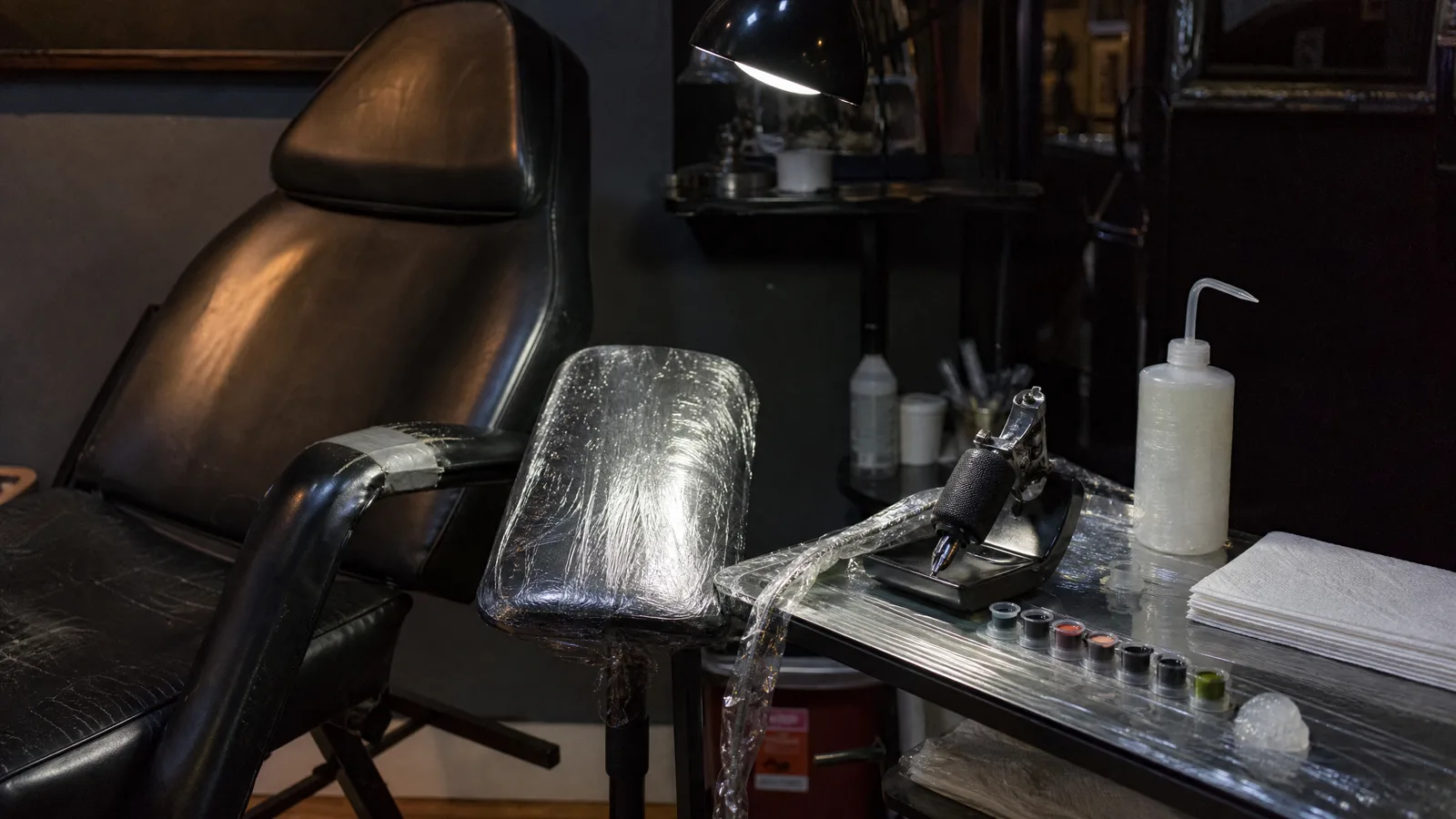
The studio's coverage, and the work's
The premises side is standard small-business ground: general liability covering the NAIC's four categories, bodily injury and damage to others' property among them, plus property coverage for the build-out, stations, and equipment (NAIC, Insure U: Small Business Insurance). How owners usually package that, and what a businessowners policy does and does not include, is on our salon business insurance page; the structure is the same for a studio.
The work is the part that makes body art its own insurance conversation. A claim that a tattoo or piercing itself caused harm, an infection, a reaction to ink, a procedure gone wrong, is a professional liability claim, and the NAIC lists professional liability among the risks a standard general liability policy does not protect against. For a studio, the professional piece is not an add-on; it is the point.
Hiring changes the stack the same way it does everywhere: workers compensation is required in nearly all states once there are employees (NAIC).
Bloodborne pathogens: the exposure underneath everything
Body art works with broken skin, which is why the risk underneath every policy here is the one OSHA's Bloodborne Pathogens standard exists for: occupational exposure to infectious microorganisms in human blood, including hepatitis B, hepatitis C, and HIV (OSHA, Bloodborne Pathogens and Needlestick Prevention). For employers whose workers are exposed, the standard requires an exposure control plan, engineering and work practice controls, protective equipment, training, and hepatitis B vaccination.
A solo artist with no employees is not an OSHA-covered employer, but the exposure does not care about that distinction, and state and local body-art rules impose their own infection control requirements. Licensing for tattooing and piercing is state and local, and it varies substantially; check your state and local health department rather than assuming any national rule. Carriers underwrite the same facts: expect questions about sterilization, single-use equipment, and documented practice.
Artists: employed, renting, or on your own
Studios run on the same two arrangements salons do. Employed artists work under the studio's policies. An artist renting a chair is an independent business: the IRS definition of a booth renter, someone who leases space from an existing business and operates independently, fits a chair-renting tattoo artist exactly (IRS Publication 4902). The independence test and the coverage a renter carries are laid out in our guide to insurance for booth renters; substitute "chair" for "booth" and it reads the same.
Two boundary notes. Piercing is commonly written alongside tattooing but must be declared as a service. Cosmetic tattooing sits closer to the skincare line and some carriers treat it separately, so name it explicitly. Laser tattoo removal is neither: it is generally treated as a medical exposure, a different placement with different rules, and worth a separate conversation with an agent who handles medical risks. For adjacent studio types, see nail salon insurance, or start at the overview.