
Barber shop insurance, for the shop and the chair
A barber shop carries general liability for the premises, professional liability for the work, property coverage for the build-out, and workers compensation once it employs barbers. The industry's twist is that many shops employ nobody: the chairs are rented, each barber is a business of one, and coverage has to follow that structure.
What coverage a salon needs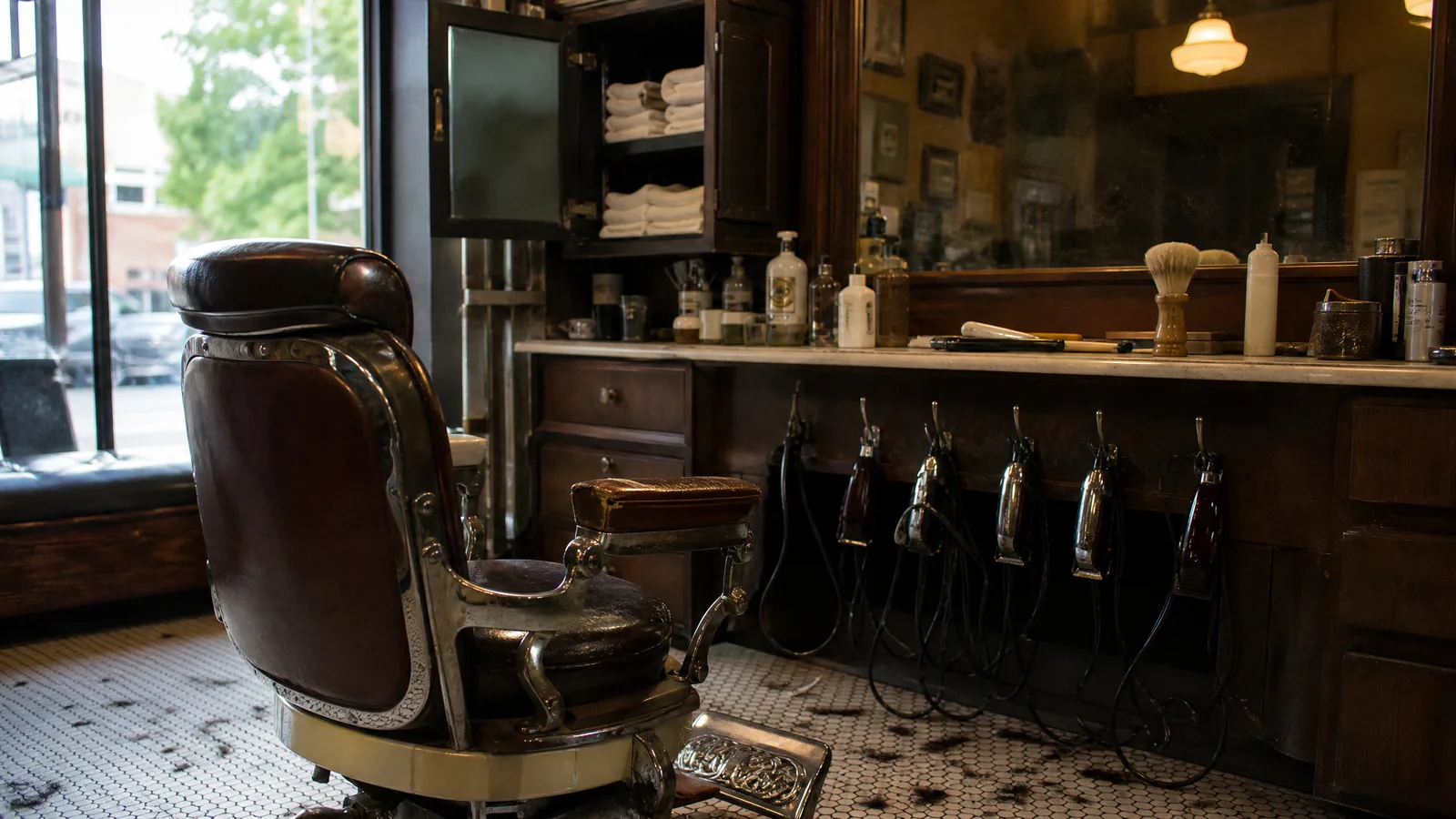
Blades, sanitation, and the professional liability hook
The coverage split is the one that runs through every page on this site. General liability answers for the premises, covering the NAIC's four categories with bodily injury and damage to others' property at the front (NAIC, Insure U: Small Business Insurance); professional liability answers for the work, which a standard general liability policy does not reach. In a barber shop, the work means blades against skin: straight-razor shaves, clipper work, the occasional chemical service. A claim that a service caused a cut, a burn, or an infection is a professional liability claim.
That is why sanitation is an underwriting topic and not just a board topic. State barbering rules govern tool disinfection, and the practice that keeps your license clean is the same practice an agent takes to a carrier. Expect questions about it.
The rest of the owner's stack works as it does for any salon-floor business: property coverage for stations, chairs, and equipment, packaging through a businessowners policy, workers compensation required in nearly all states once you hire. The full walk-through is on our salon business insurance page and applies to a barber shop without translation.
The self-employed barber, which is most barbers
Chair rental is the default arrangement in much of the industry, and it maps exactly onto the structure the IRS describes for booth renters: someone who leases space from an existing business and operates their own business as an independent contractor (IRS Publication 4902, which is written for the cosmetology and barber industry by name). A renting barber is a business of one: their own clients, their own prices, their own coverage. The full independence test and what a renter carries are in our guide to insurance for booth renters; it reads the same with a chair in place of a booth.
Licensing runs on the same two-track structure as the rest of personal care, and in a number of states one agency handles both trades; Texas's program is literally named Barbering and Cosmetology, issuing individual and establishment licenses as separate categories (Texas TDLR). Mobile barbering adds the premises question on wheels: some states license mobile establishments separately, and a vehicle used for the business raises a commercial auto conversation. Say "mobile" first if that is the model.
How the licensing is actually arranged differs state by state, and we cover the four states where the combined salon-and-barber question has its own demand: Massachusetts (one combined board), Pennsylvania (two separate boards), Texas (one TDLR program), and New Jersey (one board, six shop license types). Adjacent reading: hair salon insurance for the salon-side version of the same floor, or the overview if you are deciding which situation is yours.